
Introduction
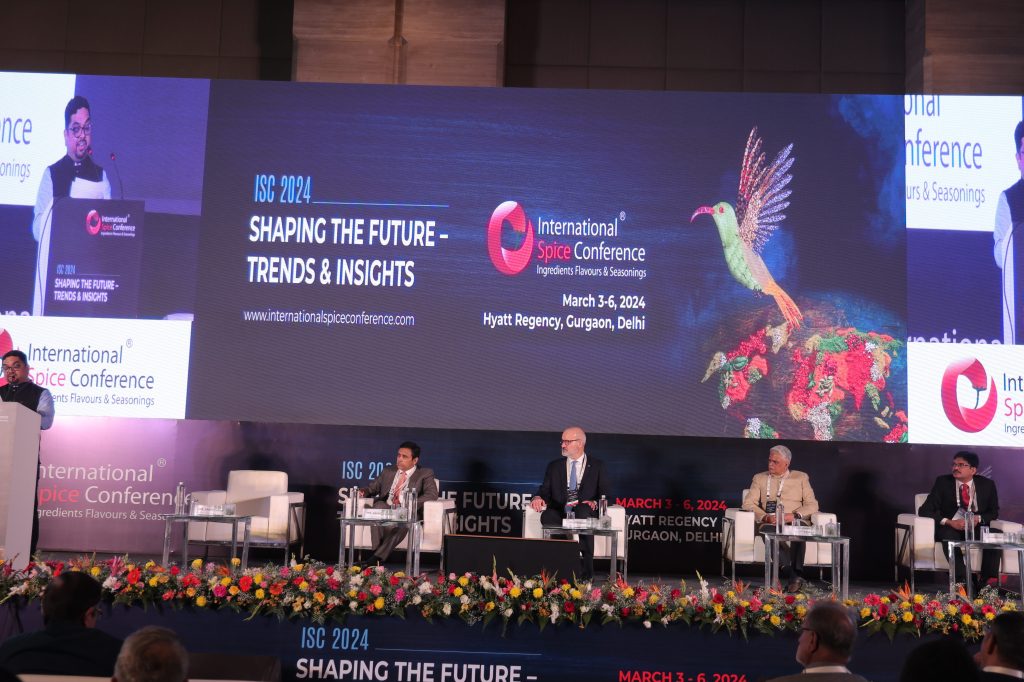
The International Spice Conference 2024 (ISC-2024), held at the Hyatt Regency in Gurgaon during March 3-6, 2024 was not just a celebration of flavours but also a deep dive into the critical issues facing the spice industry today. Among the various enlightening sessions, the roundtable on “Pesticide Residues in Spices: Challenges and Way Forward” emerged as a pivotal platform for addressing one of the industry’s most pressing challenges. The session was ably moderated by Mr. Ramkumar Menon (Chairman, World Spice Organisation) and chaired by Dr. Paresh G. Shaw (Chairman, FSSAI Panel on Pesticide Residues). This blog post revisits the insightful session, reflecting on the significant points raised by the speakers and summarising the key takeaways and recommendations.
Key Deliberations


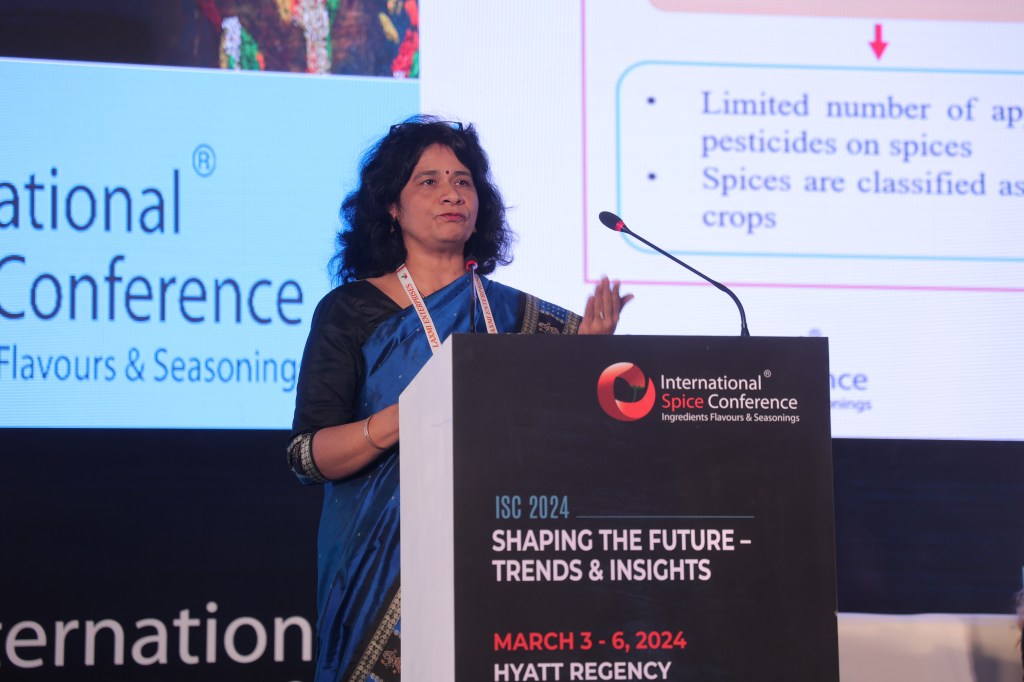
Regulatory Frameworks Across Different Countries: Ms. Lois-Rossi
(Former Registration Director, US EPA) discussed how countries like the USA regulate pesticide residues in spices, highlighting the role of agencies like the EPA and FDA in setting and enforcing Maximum Residue Limits (MRLs) or tolerances. Mr. Roberto Fanni (Herbs and Spice Specialist, Jayanti Herbs and Spices) provided an EU perspective, detailing the rigorous process of setting MRLs and the principle of “as low as reasonably achievable” levels. His insights into the EU’s proactive stance on pesticide residue regulation offered a model of stringent consumer protection that other regions could emulate or adapt.
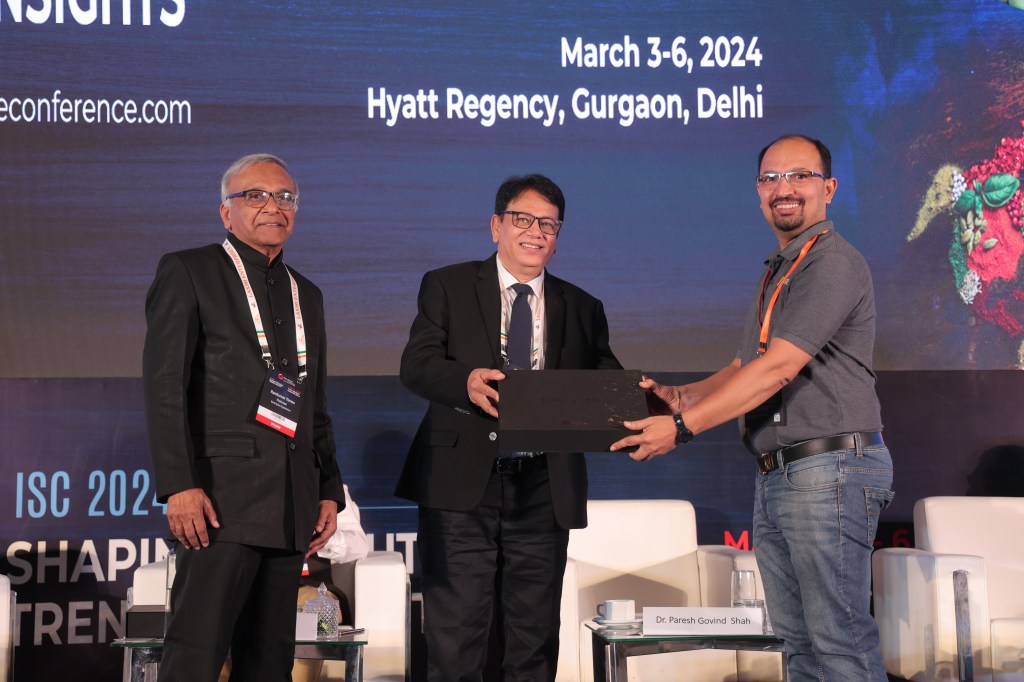
Dr. Vandana Tripathi (National Coordinator, ICAR AINP on Pesticide Residues) and Dr. Paresh Shah took the stage to lay out the Indian perspective, emphasising the intricate balance required between using pesticides for crop protection and ensuring the safety of spices for consumption. They shed light on India’s tripartite regulatory approach involving the Ministry of Agriculture, the Ministry of Health and Family Welfare, and the Ministry of Commerce, underscoring the complexity of aligning these regulations with international standards. The unique challenges of regulating pesticides in spices, including the need for more label claims and the complexities of spice matrices, were discussed. The session underscored the importance of adapting regulatory standards to the specificities of spice production and consumption.
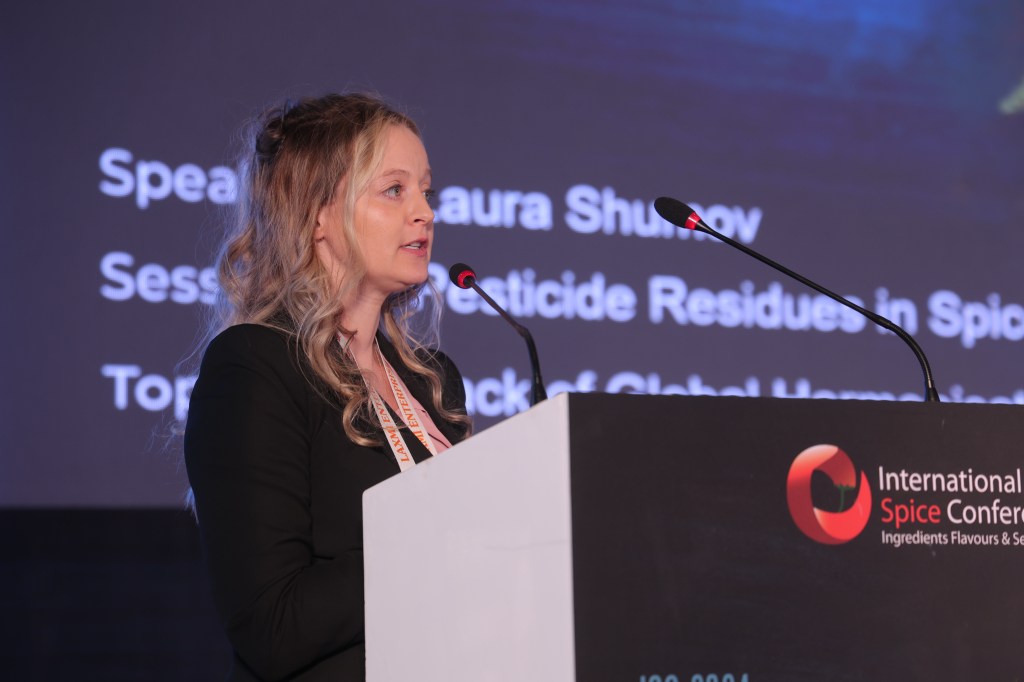
Need for Harmonisation: Ms. Laura Shumow, Executive Director
from the American Spice Trade Association highlighted the global disparity in MRLs and the need for harmonisation to support the spice trade with particular attention to the challenges posed by differing regulations. The increased sensitivity in detection technologies may lead to more instances where crops exceed the set MRLs, not necessarily because of unsafe practices but due to the heightened ability to detect residues. An important question raised by Shumow was whether tolerances for processed foods are adequately addressed in current regulations, suggesting that a similar approach should be applied to spices. Given that spices often undergo processing which can affect residue levels, it’s crucial to consider how these processes impact the final product’s safety and compliance with MRLs.
Another significant proposal was that import tolerance petitions should be based on monitoring data. This approach would ensure that the established tolerances are reflective of actual residue levels found in spices, making them more relevant and scientifically justified. By leveraging real-world data collected from various sources, regulatory bodies can set MRLs that are both practical for producers and safe for consumers.
The EPA pilot program, as highlighted by Laura Shumow, is aimed at harmonising with international Maximum Residue Levels (MRLs) and fostering collaboration with global partners to establish tolerance levels. This initiative represents a significant step towards creating a more consistent and unified global regulatory landscape for pesticide residues. She underscored the importance of international cooperation in data sharing and standard setting.
Crop Grouping as an Alternative: Dr. P.K. Chakraborty (Former Member, ASRB DARE and former ADG Plant Protection) added to the discourse by discussing the efforts within India to develop crop grouping and streamline the pesticide registration process. He highlighted that among the 554 crops cultivated in India, only 37 are considered major crops based on factors like consumption, acreage, and production. His call for “a more inclusive approach to cover the wide array of spices grown across the country” was a highlight, pointing towards the need for flexibility in regulations to accommodate the diversity of spice crops.
He underscored the importance of periodically reviewing and potentially updating the crops that are designated as representative of their respective groups. Such a review process would ensure that the crop groupings remain relevant and accurately reflect the changing agricultural practices, crop varieties, and market demands. This approach suggests easing the data requirements necessary for registering new pesticides or for extending existing pesticide registrations to additional crops. By relaxing these requirements, it could facilitate a more streamlined process for including a broader range of crops under pesticide safety and efficacy evaluations.
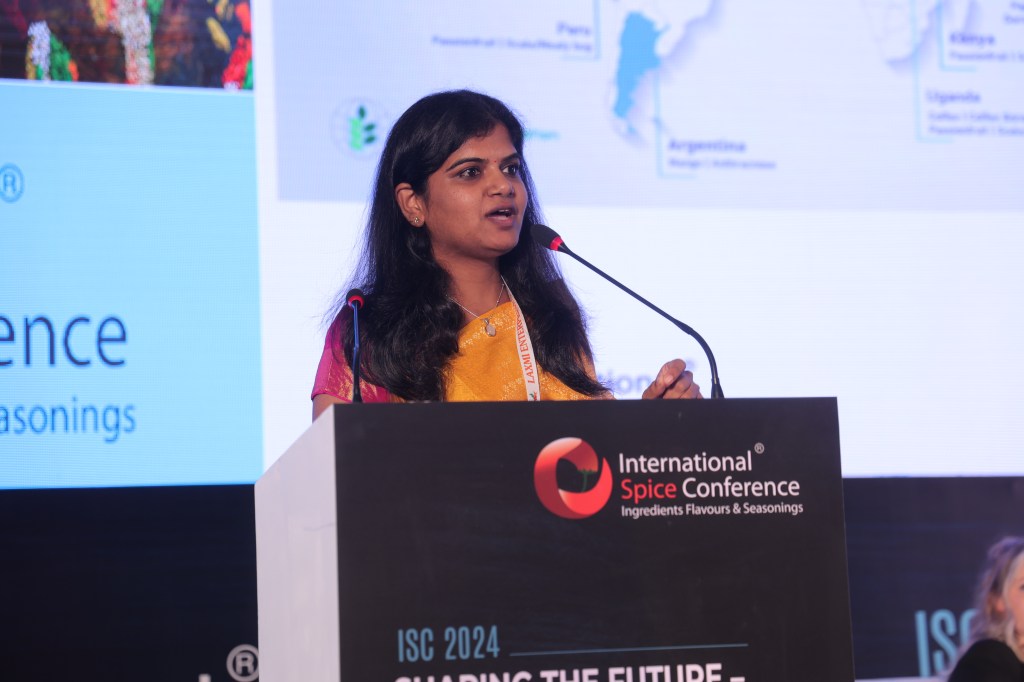
Minor Use Crops and MRL Fixation: Dr. Sasireka Rajendran’s presentation on behalf of the Minor Use Foundation focused on the challenges related to MRLs encountered by different countries in the cultivation and trade of specialty or minor crops (such as spices). She provided a comprehensive overview of the Minor Use Foundation, including its operational model and priorities, which are instrumental in addressing these challenges.
MUF support data generation for these crops by developing MRL Data and, if needed, the Foundation supports the conduct of studies to demonstrate the effectiveness of pesticides on minor crops, which is a key component of both registration and MRL establishment. To achieve these objectives, the Foundation leverages a Public-Private Partnership (PPP) model, fostering collaboration between governments, industry stakeholders, and other partners.
One of the significant contributions of the Foundation is in capacity building. By pooling resources and providing funding, it assists countries in generating the basic data required for pesticide registration and MRL fixation for minor crops. This effort not only addresses the immediate needs for compliance and trade but also strengthens the overall regulatory and scientific capabilities of participating countries in managing pesticide use in specialty crops effectively.
Action-Oriented Collaboration: Dr. P.K. Singh, Agriculture Commissioner & Chairman, CIBRC, Govt. of India, shed light on the perspective that pesticide usage in India is relatively minimal compared to other countries. This context becomes particularly relevant when discussing pesticide usage in relation to spices, which are considered minor crops with relatively low consumption levels. He questioned the justification for stringent MRLs for spices, suggesting that the minimal consumption of spices might not necessitate such strict standards.
He proposed the formation of an action-oriented group by the the spice and pesticide industries. This group’s objective would be to support the generation of data that is crucial for facilitating the expansion of pesticide labels and the fixation of MRLs for spices. This group may submit a list of pesticides for immediate consideration by regulatory authorities. This list would prioritise pesticides that are critical for the cultivation of spices, addressing pest and disease challenges specific to these crops.
Key Recommendations and Way Forward
The session boiled down to several actionable recommendations:
- Enhancing label claims and MRLs: Utilise monitoring data to support the expansion of label claims and the establishment of MRLs for a wider range of spices.
- Risk assessment based on consumption data: Emphasise the importance of incorporating consumption data into risk assessments to ensure MRLs are not only scientifically justified but also relevant to actual dietary exposure.
- Harmonising regulations: Work towards global harmonisation of MRLs and crop grouping standards to simplify international trade and ensure consumer safety.
- Supporting data generation: Industries should form action-oriented groups to support the generation of data necessary for regulatory processes, including label expansion and MRL fixation.
- Prioritising pesticides: Submit a prioritised list of pesticides essential for spice cultivation to regulatory authorities to expedite the review and approval process.
- Speed up crop grouping: Implement crop grouping and update the representative crops within each crop group to ensure that regulatory frameworks remain relevant and scientifically sound.
- Adjusting LoQ for spices: Consider the unique characteristics of spices and adjust the Limit of Quantification (LOQ) to a more practical level, reflecting the complexities of spice matrices.
Concluding Thoughts
The roundtable discussion at ISC-2024 brought to light the multifaceted challenge of managing pesticide residues in spices. The dialogue between experts drawn from diverse countries, underscored the urgency of addressing this issue through cooperation, innovation, and a commitment to safety and sustainability.
As we reflect on the insights shared, it’s clear that the path forward requires a concerted effort to harmonise regulations, embrace technological advancements, and prioritise the safety of spices at every step of the supply chain. The future of the spice industry depends on our ability to adapt, collaborate, and ensure that the spices that enrich our lives are produced and consumed responsibly.
Additional Reading
- Eapen, S.J., Thomas, L., Praveena, R. et al. 2022. Pesticide regulation policy and global food safety for Indian spices. Journal of Consumer Protection and Food Safety 17, 407–410. https://doi.org/10.1007/s00003-022-01387-9
- Eapen, S.J. 2023. Pesticides and spices: Challenges and implications for domestic and international trade. https://sanjoe.data.blog/2023/02/15/pesticides-and-spices-challenges-and-implications-for-domestic-and-international-trade/
- ICAR – Indian Institute of Spices Research 2022. The Pesticide dilemma in spice sector: Espousing an enabling policy environment, IISR Policy Brief No. 2. Pp 6. http://spices.res.in/sites/default/files/Policy%20brief2.pdf
 Research Rundown